 English GB
 Français
Ferme du Hitton: Organic Cosmetics Born in the Heart of the Gers
At Ferme du Hitton, making a cosmetic product often begins not in a laboratory, but in a meadow, alongside an animal or among rows of aromatic plants. Based in Biran, in the Gers region of south-west France, Cécile and Manu Guichard have been developing a project since 2012 in which organic farming, animal husbandry, aromatic plants, distillation and artisan cosmetic production are closely connected. Organic donkey milk from the farm's own herd, organic goat milk sourced from a neighbouring farm and plants grown and distilled on site are used to create different ranges of natural soaps and cosmetics. Managing several stages of production, from selected raw materials through to the finished product, has become one of Hitton's defining characteristics. Behind every soap, cream, hydrosol or essential oil lies a story of raw materials, farming practices and artisan expertise. It is a practical approach to organic cosmetics that keeps their origins clearly in view.
An Ecological Farm That Became a Cosmetic Farm
The story of Ferme du Hitton began with a change of life. After spending several years travelling around the world, Cécile and Manu chose the Gers to turn a long-held idea into reality: creating a farm where their family could live close to nature and animals. They settled on a 90-hectare property of woodland and meadows above the village of Biran, with the Pyrenees forming the backdrop.
From the outset, the project went beyond the model of a conventional farm. Their aim was to gradually create a coherent place combining livestock farming, crops, processing and artisan production. In January 2012, the first Pyrenean donkeys arrived at the farm. The first lavender plants were planted that same year.
Cécile and Manu trained with specialists in dairy donkey farming and aromatic plant cultivation. Through this training and their encounters with experienced producers, a distinctive model gradually took shape: produce cosmetic ingredients on the farm, process them when necessary, then develop skincare and personal care products capable of making meaningful use of those ingredients.
Establishing an artisan soap workshop became a natural extension of the project. Donkey milk produced on the farm could be incorporated into soaps and cosmetics, while plants grown in the fields could be distilled to produce hydrosols and essential oils. Ferme du Hitton gradually became a producer of natural and organic cosmetics with an identity deeply rooted in its land and agricultural activity.

Organic Donkey Milk: An Emblematic Hitton Ingredient
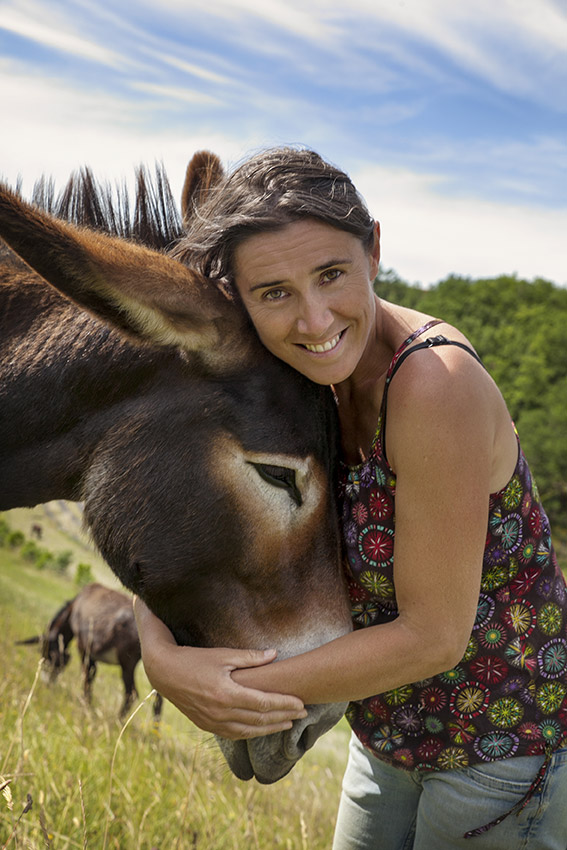
Donkey milk occupies a central place in both the history and the cosmetics of Hitton. It is not simply an ingredient purchased and added to a formula: the milk used by the farm comes from its own herd of Pyrenean donkeys. This direct connection makes it possible to link animal husbandry with the production of soaps and skincare products.
Today, the herd consists of around thirty donkeys and their foals. The animals spend the year across several hectares of meadows and woodland and have free access to shelters. Their natural rhythm is an integral part of the way the farm operates: milk production cannot be separated from the presence and needs of the foal.
Choosing the Pyrenean donkey also has a heritage dimension. The Gers is part of the historical home of this breed, and the farm contributes to its recognition and preservation. Ferme du Hitton has been recognised by the Fondation du Patrimoine for its work to support and preserve the Pyrenean donkey.
In cosmetics, donkey milk is used across several product families. Hitton's cold-process donkey milk soaps contain a significant proportion of milk, while selected skincare products such as face cream, hand cream and body milk are formulated with 40% organic donkey milk from the farm's herd.
This concentration gives donkey milk a meaningful place within the formula rather than using it simply as a headline ingredient. Combined with plant oils, butters, macerated oils and selected botanical ingredients, it can be used to develop different textures and products for the face, body and everyday cleansing.
For Hitton, working with donkey milk therefore means knowing and managing the ingredient from its origin: caring for the animals that produce it, respecting their natural rhythm and then designing formulas in which the milk has a role that is consistent with the intended use of the finished product.
Organic Goat Milk: Another Approach to Artisan Soap
Alongside donkey milk, Hitton also works with organic goat milk to create a dedicated range of soaps. The origin of this milk is different and is worth clarifying: unlike the donkey milk produced directly at Ferme du Hitton, the goat milk used in these soaps comes from a neighbouring farm in the Gers.
This choice enables Hitton to maintain a local sourcing approach while working with a second dairy ingredient with different characteristics. The soaps in this range are formulated with 30% organic goat milk and produced using the cold-process soapmaking method.
Depending on the product, goat milk is combined with different ingredients including shea butter, plant oils, clays, essential oils, botanical powders and natural extracts. An unscented Nature version containing no essential oils is also available for those seeking a deliberately simple formula.
This range is not designed to replace the donkey milk products. Instead, it complements the Hitton collection by offering another way of combining organic milk with artisan soapmaking. Choosing between donkey milk and goat milk products can therefore depend on the complete formula, whether essential oils are present, the desired texture and fragrance, and above all the needs and preferences of the skin.
What matters is not to reduce a soap to a single highlighted ingredient. The qualities of a finished product also depend on the choice of oils and fats, the manufacturing process, the proportion of its different ingredients and the overall balance of the formulation.
Aromatic Plants Grown and Distilled on the Farm
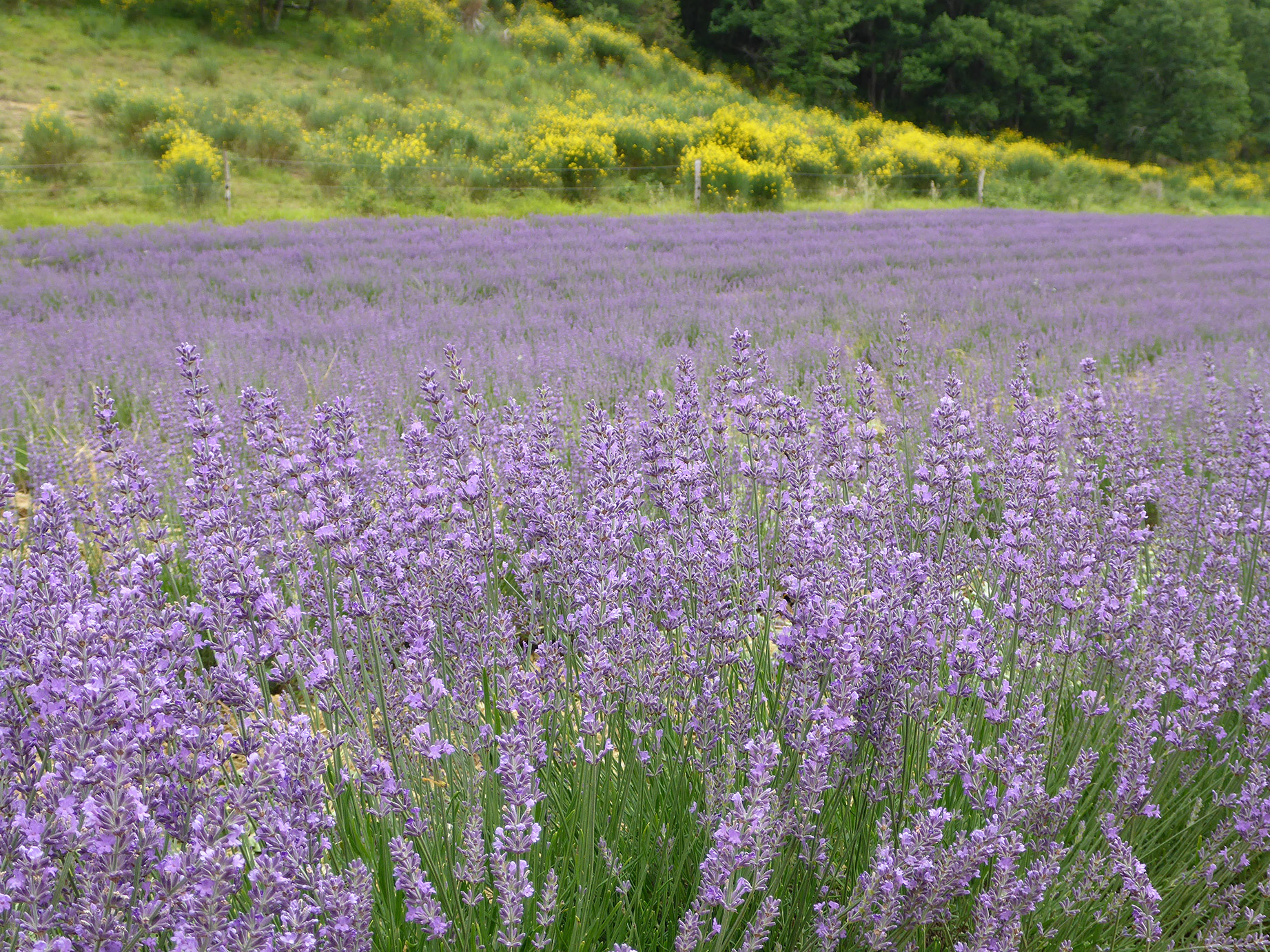
Another major part of Hitton's identity grows directly in its fields. Since the early days of the farm, Cécile and Manu have cultivated aromatic plants according to organic farming principles. True lavender, Italian helichrysum, peppermint, rosemary, calendula, cornflower, clary sage, lemon balm, thyme, hyssop, savory and oregano are among the plants cultivated and worked with over the years.
The plots are located close to the farm's distillery. This organisation reduces the time between harvesting and processing and allows Hitton to directly oversee the different stages, from the field through to distillation.
Aromatic plants are distilled using steam distillation. Steam passes through the plant material and carries its aromatic compounds. Once cooled, the distillate separates into two products: essential oil and hydrosol, the latter also being referred to as floral water for certain plants.
Essential oil is the highly concentrated aromatic fraction of the plant. Its use therefore requires particular precautions depending on the plant concerned, dosage, method of use and the individual using it.
Hydrosol is a product in its own right. Hitton pays particular attention to the quantity of plant material used during distillation and packages its floral waters in opaque glass bottles to limit their exposure to light.
These crops enable the farm to offer essential oils and hydrosols while also establishing a direct connection between aromatic plant cultivation and selected cosmetic formulations. Once again, the ingredient has an identifiable history before it becomes part of the finished product.
From Raw Ingredient to Cosmetic Product: Artisan Expertise
Producing milk or growing plants is not enough to make a well-designed cosmetic product. Hitton's second area of expertise is formulation and manufacturing. The farm has its own artisan soap workshop where its soaps and cosmetics are produced.
For its soaps, Hitton uses the cold-process method. This traditional technique is based on the reaction between plant oils or butters and an alkaline solution. It makes it possible to produce soap without prolonged cooking of the soap paste while naturally retaining the glycerin created during the saponification process.
Donkey milk or goat milk is then incorporated according to the individual recipe, together with selected plant oils, butters, clays, botanicals or essential oils. Each product therefore has its own composition and intended use.
Creating face and body care products requires a different formulation process. The aim is to achieve a stable, pleasant texture suited to the method of application while giving each raw material a coherent purpose within the formula. Some Hitton skincare products are formulated with as much as 40% organic donkey milk.
This diversity is why it is more useful to assess a formula as a whole than to focus solely on the ingredient highlighted on the front of a product. The percentage of milk, the presence of an essential oil, the choice of plant oils and the type of finished product can all significantly change how that product is intended to be used.
Organic Cosmetics: Verifiable Commitments Rather Than Claims Alone
The term natural cosmetics can cover very different realities. Hitton has therefore chosen to place its production within recognised and controlled standards. The farm's donkey milk and aromatic plant production is certified organic by Ecocert, while its soaps and cosmetics are produced according to the COSMOS ORGANIC standard.
The cosmetic range is also palm oil free. Beyond formulation, the farm works on different aspects of its environmental footprint. Rainwater collection, renewable energy production, heating that makes use of wood resources, hedge planting and maintaining crops without chemical herbicides are among the measures introduced over the years.
Hitton has also received recognition from Slow Cosmétique, an initiative that promotes more mindful cosmetic consumption and a better understanding of cosmetic formulations.
These commitments are most meaningful when they are connected to practical actions. The aim is not to describe a product as responsible simply because the word “natural” appears on its label, but to be able to explain where selected ingredients come from, how they are processed and within what framework the cosmetics themselves are produced.
Cosmetics Rooted in a Place: The Gers and Occitanie
Hitton cosmetics are inseparable from the place where they are made. The farm is located in Biran, in the Gers department of Occitanie in south-west France. Its landscapes, meadows, woodland, aromatic plant fields and the historical presence of the Pyrenean donkey have all directly influenced the project.
This local connection can be seen in several practical choices: raising the donkeys on the farm, growing aromatic plants close to the distillery, sourcing goat milk from a neighbouring farm and manufacturing soaps and cosmetics on site.
In a cosmetics market where products can involve long and complex supply chains, this proximity provides unusual visibility over the origin of several emblematic ingredients. It does not mean that every ingredient in a cosmetic formula can be produced in the Gers, but it does allow Hitton to directly manage some of the raw materials that are central to the identity of its range.
The farm is also open to visitors. Seeing the donkeys, exploring the fields or learning how the distillation process works provides a practical way to understand what lies behind some of the products made by Hitton.
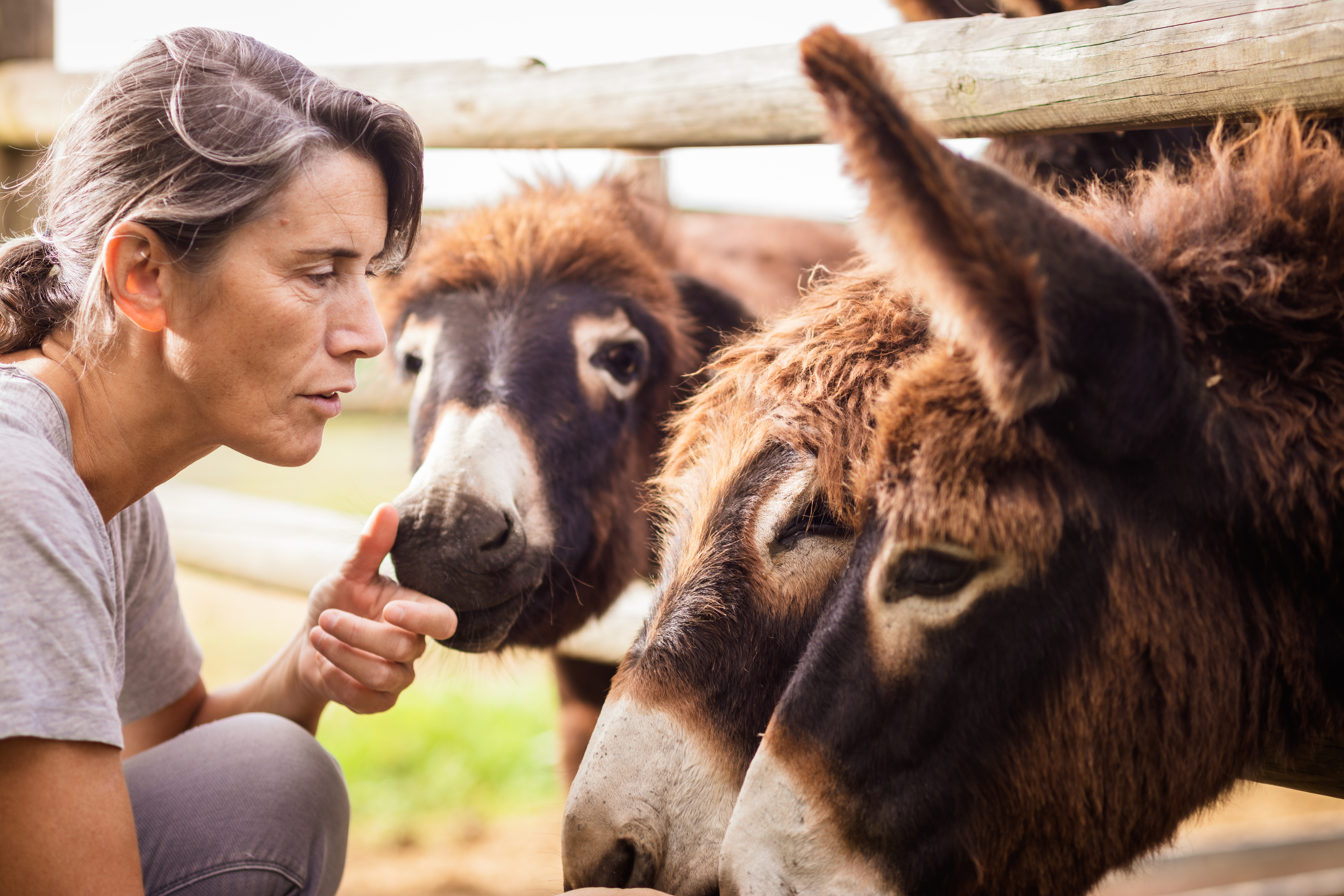
Donkey Milk, Goat Milk or Aromatic Plants: How Do They Differ?
These three areas do not serve exactly the same purpose. Donkey milk is Hitton's historical and emblematic raw material: it is produced by the farm's own herd and used in soaps as well as a range of face and body care products.
Organic goat milk is mainly used in a dedicated collection of cold-process soaps. It comes from a neighbouring farm and enables Hitton to create different combinations of raw materials and different types of formulation.
Aromatic plants represent a third area of expertise. They are used to produce hydrosols and essential oils and can also feature in selected cosmetic formulas. Their use should be considered according to the plant, the finished product and, in the case of essential oils, the specific precautions associated with them.
There is therefore no single Hitton ingredient that is systematically “better” than the others. A donkey milk cream, a goat milk soap and a hydrosol perform different functions. Choosing between them starts with the intended use, the area of application, skin sensitivity and the complete composition of the product.
A Different Approach to Making Natural Cosmetics
Since 2012, the Hitton project has developed around a straightforward idea: bring agricultural production and cosmetic manufacturing as close together as possible. Donkey milk comes from the farm's own herd. Aromatic plants grow in its fields before being distilled on site. Goat milk used in the soaps comes from a neighbouring farm. These raw materials then become part of the formulation and artisan manufacturing process.
This organisation does not remove the need to consider every product individually. A cosmetic remains a complete formula with its own purpose, recommended frequency of use and precautions. However, this approach makes it possible to understand much more precisely what lies behind several of the ingredients highlighted in the finished products.
It is this continuity between livestock farming, plants, organic agriculture, distillation, soapmaking and cosmetics that defines Ferme du Hitton today: not simply a natural skincare brand, but a working farm where some of the raw materials begin their journey before being transformed into products designed for the skin, hair and everyday personal care.
Frequently Asked Questions About Ferme du Hitton and Its Organic Cosmetics
Ferme du Hitton combines organic farming, animal welfare, aromatic plant cultivation, local processing and artisan cosmetic manufacturing. Its model is based in particular on raising Pyrenean donkeys, producing organic donkey milk, growing and distilling aromatic plants and manufacturing soaps and skincare products in the Gers region of France. The farm has also introduced various environmental measures over the years, including hedge planting, rainwater collection and the use of renewable energy.
Hitton soaps and cosmetics are made at Ferme du Hitton in Biran, in the Gers region of Occitanie, south-west France. The farm brings together several complementary activities on one site: Pyrenean donkey farming, aromatic plant cultivation, distillation and artisan cosmetic manufacturing. This organisation enables Hitton to directly produce some of its most distinctive raw materials before using them in its cosmetics.
The organic donkey milk used in Hitton cosmetics comes directly from the farm's own herd of Pyrenean donkeys. Hitton can therefore trace this raw material from the animals themselves through to its use in soaps and skincare products. Selected face and body care products are formulated with 40% organic donkey milk, while donkey milk is also used in the farm's artisan cold-process soaps.
Donkey milk has been central to the Hitton project since the first Pyrenean donkeys arrived at the farm in 2012. One of its defining characteristics at Hitton is its origin: the milk is produced by the farm's own herd and incorporated into different types of soap and skincare products. This gives Hitton direct knowledge of an ingredient that plays an important role in the identity of its cosmetic range.
The organic goat milk used by Hitton comes from a neighbouring farm in the Gers. Unlike the donkey milk, it is therefore not produced by Hitton's own herd. The goat milk soaps are currently formulated with 30% organic goat milk and made using the cold-process method, with different combinations of plant oils, butters, clays and botanical ingredients depending on the product.
Hitton organically grows a variety of aromatic plants including true lavender, Italian helichrysum, peppermint, rosemary, calendula, cornflower, clary sage, lemon balm, several varieties of thyme, hyssop, savory and oregano. Some of these plants are distilled directly on the farm using steam distillation to produce essential oils and hydrosols.
Ferme du Hitton's donkey milk and aromatic plant production is certified organic by Ecocert. Hitton soaps and cosmetics are produced according to the COSMOS ORGANIC standard. The individual product page should always be consulted for precise information about the formulation, certification, percentage of organic ingredients and directions for use of a particular product.
Hitton is a farm in the Gers region of south-west France that combines agricultural production with cosmetic manufacturing. It raises Pyrenean donkeys whose organic milk is used in selected soaps, creams and body care products, grows and distils aromatic plants and manufactures its soaps and cosmetics on site. Its range includes cold-process soaps, donkey milk skincare, goat milk soaps, hydrosols and essential oils.
The two milk sources are different. Organic donkey milk is produced directly at Ferme du Hitton by its own herd of Pyrenean donkeys. The organic goat milk used in Hitton soaps comes from a neighbouring farm in the Gers. Hitton then formulates and manufactures the soaps using these ingredients.
Donkey milk is Hitton's historical raw material and comes from the farm's own herd. It is used in soaps and a range of face and body care products. Organic goat milk comes from a neighbouring farm and is mainly used in a dedicated range of cold-process soaps. Aromatic plants grown at Hitton are used in particular to produce hydrosols and essential oils and may also feature in selected cosmetic formulas. The most appropriate choice therefore depends on the type of product, its complete formulation and its intended use.
Producing selected raw materials directly makes it easier to understand their origin and the conditions in which they were produced. At Hitton, this applies particularly to organic donkey milk and aromatic plants grown and distilled on the farm. It does not mean that every ingredient used in a cosmetic is produced on site, but it creates a direct connection between the farm's agricultural activity and several of the ingredients that define its finished products.